



We have recently made a new investment in Visban, a startup developing millimeter-wave communication repeaters and control software systems, through our Fund Ⅲ, which specializes in deep tech and is currently making new investments.
With a mission to “realize technology that enables stable millimeter-wave connectivity anytime, anywhere”, Visban is developing repeater devices using glass substrates and an AI orchestrator that autonomously controls them.
In the 5G era, millimeter-wave technology—which enables the fastest communication speeds—has long been limited in its potential due to being considered “radio waves that cannot reach user equipment.” Visban’s technology aims to solve this fundamental challenge, and we believe it has the potential to become an indispensable platform provider for 5G and future next-generation communication infrastructure.
In this article, we will explain the challenges and market context of millimeter-wave communications, as well as the rationale behind Beyond Next Ventures’ investment in Visban.
Background: A Fundamental Challenge in Mobile Communications
Demand for mobile communications continues to grow unabated [1]. To secure the communication capacity needed to meet this demand, the use of higher frequency bands that provide sufficient bandwidth is essential. Mobile communications have undergone generational upgrades roughly every 10 years, with each new generation introducing higher frequency bands. Millimeter waves (primarily the 26/28 GHz bands) were introduced with 5G, enabling high-speed communications in the Gbps range.
However, there is a fundamental challenge here. While radio waves are better suited for high-speed communication at higher frequencies, they (1) attenuate rapidly in the air and (2) have difficulty diffracting around obstacles. Whereas the typical frequency bands used for 4G LTE can reach several kilometers in open suburban areas, millimeter waves generally only reach a few hundred meters. Additionally, significant coverage gaps occur behind buildings and other structures. This is an inevitable consequence arising from the laws of nature.
Consequently, ensuring sufficient coverage in the millimeter-wave band requires a massive number of base stations, which drastically worsens the ROI of the business. The paradox that faster radio waves are harder to deliver is one of the greatest structural challenges facing mobile communications — now a fundamental part of daily life — and we believe this issue will only grow more severe in the future.
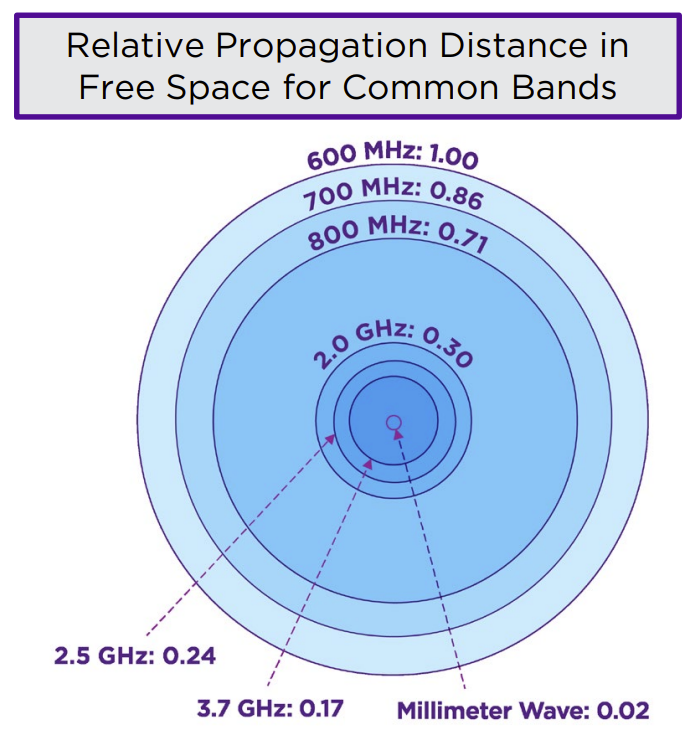
A Unique Approach Rooted in Display Technology Expertise
Visban’s approach offers an extremely unique perspective on this challenge, and the fact that it can present innovative solutions—typical of a startup—to the aforementioned issues was a major factor in our decision to invest. The key concept is the NCR (Network-Controlled Repeater), a device that relays radio waves to reach user equipment.
An NCR is a relay device that receives radio waves from base stations, amplifies them, and retransmits them. By deploying NCRs throughout urban areas and creating a “relay chain” of radio waves between base stations and users, it becomes possible to deliver hard-to-reach millimeter-wave signals to users. NCR is a relatively new concept that were standardized in the first half of 2024 as a promising technology for 5G coverage expansion in 3GPP Release 18 [3], and Visban is a pioneering developer in this space.
The company’s approach is highly promising as a technical implementation of NCR. Its key features are: (1) the use of glass substrates for NCR devices (RF-on-Glass technology), and (2) the development of AI-powered control technology for managing a massive number of devices.
First, by using glass substrates, the company has successfully achieved a rare combination of low cost, high performance, and an optimal form factor. Glass substrates significantly reduce signal loss in high-frequency bands and can be processed on display manufacturing lines, thereby keeping manufacturing costs down. Additionally, this enables the creation of lightweight, durable, and compact devices.
The realization of low-cost and compact devices enables a significant expansion of coverage through the large-scale deployment of NCRs. On the other hand, advanced remote control technology is essential for optimizing such a large number of devices and ensuring signal quality. By developing multi-device control technology using reinforcement learning, Visban aims to realize a new communication infrastructure that operates in a distributed and autonomous manner.
This concept is rooted in the extensive expertise the founders cultivated over many years in the display industry. Innovation here stems from cross-industry technology transfer, unconstrained by conventional thinking in the telecommunications industry.

The adoption of millimeter-wave technology is gradually gaining momentum
The adoption of millimeter-wave technology had long been hindered by the aforementioned bottlenecks, preventing significant market expansion. However, in recent years, new developments have emerged, particularly in the United States, which further reinforced our investment decision. This is the FWA (Fixed Wireless Access) market leveraging 5G.
In the U.S., where fiber-optic penetration remains at around 60% [4] and cable communications have historically held a large market share, many households are dissatisfied with their home and office communication environments. FWA services have long existed as a convenient communication solution that does not require the installation of communication cables or fiber-optic lines; however, FWA services using 4G technology struggled to deliver sufficient communication quality.
However, in recent years, the application of 5G technology to FWA services has improved their quality, allowing them to begin surpassing cable services. As a result, users who were dissatisfied with existing services—primarily cable subscribers—are rapidly migrating to 5G FWA. In fact, some estimates suggest that since around 2022, FWA has accounted for nearly all new broadband subscriptions in the U.S.[5].
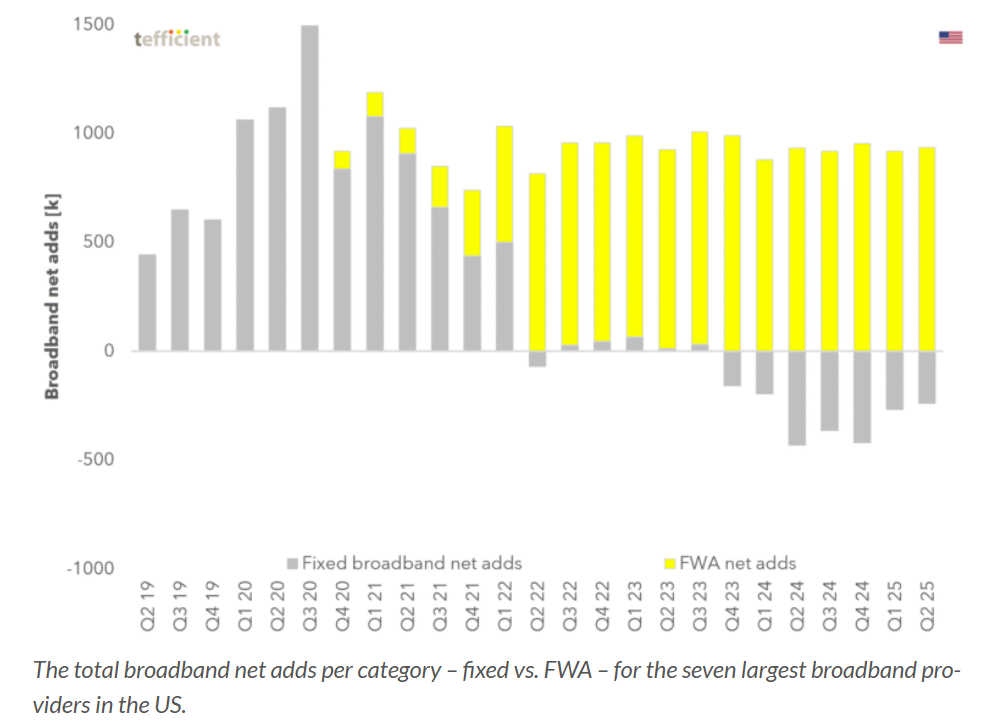
Telecom carriers view this trend as a definitive opportunity and have set extremely aggressive user acquisition targets, such as aiming to double their user base within the next few years.
On the other hand, currently, most FWA services are provided in the lower-frequency sub-6 bands (3.7 GHz / 4.5 GHz) within the 5G spectrum, and data speeds remain at levels that leaves users dissatisfied. While FWA using higher-speed millimeter-wave technology is ideal, it has not yet achieved widespread adoption due to the coverage issues mentioned earlier.
If a technology capable of overcoming this barrier and enhancing the commercial viability of millimeter-wave FWA is brought to market, it would be an invaluable asset for companies seeking to expand in the FWA market.
Furthermore, the potential impact of Visban extends beyond the millimeter-wave and FWA markets. A major strength of the company’s glass substrate technology lies in its scalability, which allows for seamless support of frequency bands even higher than millimeter-wave — bands that could be utilized in next-generation communication technologies. In such frequency bands, the importance of Visban’s technology is expected to grow even further, and we anticipate that it will continue to expand into a technology capable of supporting a wide range of next-generation communication use cases.
A Management Team with a Global Perspective
Visban’s management team consists of experienced members well-suited to turning this ambitious vision into reality. With extensive overseas business experience, they possess an exceptional management team capable of driving global business with overwhelming speed and meticulous planning.
CEO and Co-founder S.B. Cha is a seasoned executive who served as CEO at his previous company, Kinestral Technologies, from its early days, securing a cumulative $400 million in funding and growing the company into a global organization of approximately 400 employees. He is deeply trusted by those around him for his thoughtful approach to valuing his team.
Furthermore, the company has established an outstanding organizational structure, with Director and Co-founder Mr. Ryosuke Kuwada—who possesses extensive experience and a strong network in the display industry—leading business development, and Co-founder and Chief Scientist Prof. Arokia Nathan —a highly renowned researcher in this field—driving technical strategy.
The development team is also highly specialized, including Mr. Itami, Head of RF Device Development, and Mr. Nakazato, Head of Software Development. During our meeting with the company, they spoke about the future of communication technology with strong conviction enthusiasm. Their confident demeanor conveyed a compelling conviction that they can bring their vision to life.
We view Visban as a deep-tech startup that seamlessly combines uniquely competitive technology with an exceptional management team and development team capable of translating that technology into commercial success.
Tackling the Last Mile of Wireless Signals
5G and Beyond 5G are the foundational technologies that will support our future society. However, the next-generation digital society cannot be truly realized unless we overcome the barrier of high-frequency radio waves that cannot reliably reach users.
We made this investment because we are convinced that Visban—where superior technology, optimal timing for market entry, and a management team capable of world-class leadership converge—has the potential to emerge as a leader of this transformation.
As Beyond Next Ventures, we will support this endeavor to transform the world’s telecommunications infrastructure not only through capital but also by leveraging our extensive network of talent, enterprises and investors.
-
List of Sources
- [1] Ericsson “Fiber access grows across U.S., Canada but adoption still lags”
- [2] Crown Castle “Relative Propagation Distance in Free Space for Common Bands”
- [3] 3GPP “Release 18”
- [4] Hometown News “Fiber access grows across U.S., Canada but adoption still lags”
- [5] tefficient “The total broadband net adds per category”