


Of the Indian population of 1.4 billion, about 1 billion are middle class and approximately 500 million is covered by the government’s flagship healthcare program known as Ayushman Bharat. As for the remaining 1 billion middle class people, about 70% or 700 million people have zero health insurance in India, says Piyush Jain, the CEO and co-founder of CarePal Group.
Piyush – who has walked through the gleaming avenues of Wall Street and glittering consulting halls during his previous finance career in New York, London and Hong Kong –, always found himself yearning for entrepreneurship, fueled by his family that always urged him to chase that dream.
His desire to become an entrepreneur, combined with the severe state of healthcare industry in India, motivated him to set out on a journey to provide healthcare services such as affordable health insurance to Indians. Piyush is known for his passion and perseverance among our venture capitalists and has successfully scaled CarePal and ImpactGuru into a profitable venture in just a decade.
Being someone who remains grounded, Piyush straightway attributes his success to supportive investors like Beyond Next Ventures, great co-founders, and his employees.
“The fact we have survived so far needs to be credited to a wide variety of people. First of all, it’s the investors who’ve believed in us, including Beyond Next Ventures in Japan. Secondly, we are very lucky to have two co-founders, a world-class management team and a team of over 650 employees who are working day and night on our mission.”
“Thirdly it is the customers. No company can survive if they do not have the trust and the validation from their customers on their fundamental product,“ tells Piyush, whose venture has so far served 55,000 patients on the crowdfunding platform, raised $200 million in donations, and has the trust of 5.5 million global donors.
Currently, ImpactGuru receives some 4 donations per minute, says Piyush with heartfelt gratitude while speaking to us at his Mumbai office.
It sounds like a fancy speech that a successful CEO would give standing on a podium but like any entrepreneurial journey Piyush’s expedition had various challenges. Foremost of them was leaving a thriving career behind and moving back to his motherland – India.
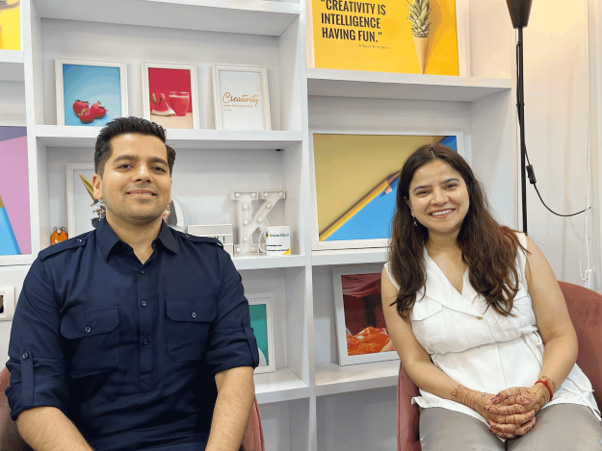
But thankfully it was never a solo journey for him. Piyush very proudly talks about his wife Khushboo Jain, the COO and co-founder of the group, who was the one to have returned to India to lay the groundwork before him.
He joined Khushboo a year later to set up what would later become a major healthcare financing ecosystem in the world’s most populated nation.
A Non-Native Disruptor
Piyush says his story is typical of industry disruptors i.e. he was able to shake up the healthcare industry because he came from outside it. For him, the validation happened when ImpactGuru’s customers could successfully raise money.
“What used to take eight months for a non-profit, we were able to raise in 8 days’ time for a patient. And that’s when we decided to pivot from being a nonprofit focused fundraising platform to be entirely focused on raising money for patients in India who are uninsured or underinsured.”
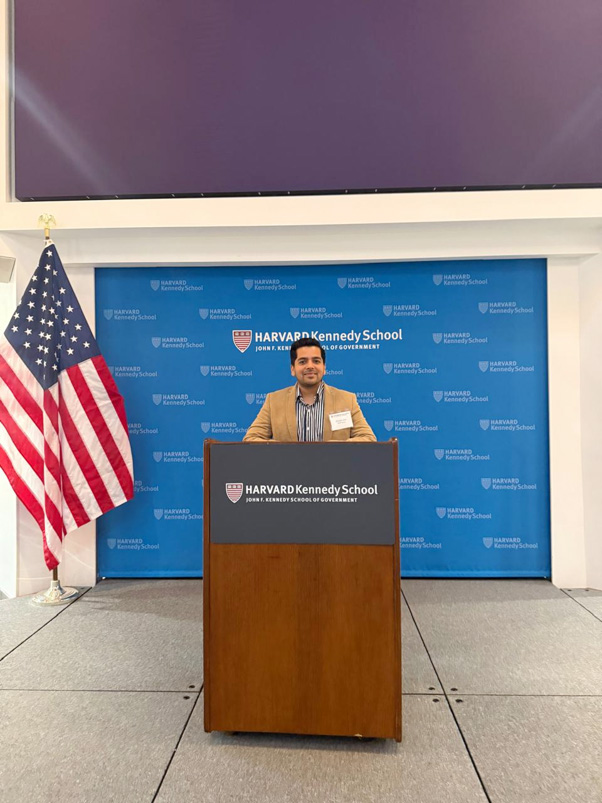
It all started when Piyush was pursuing his master’s at Harvard Kennedy School of Government and came across the concept of crowdfunding. He learnt about Kickstarter and Indiegogo while publishing a case study at Harvard.
“They (Kickstarter and Indiegogo) were doing something very different from what we do. They were basically funding projects, creative gadgets by collecting pre-sales funds from the potential customers,” he said, dressed in blue traditional Indian attire.
“And I thought what if the underlying technology platform – which is what drives crowdfunding – could be used for a fundamentally different purpose to solve real problems in India. That could be a potentially interesting opportunity,” he continued with the same passion evident in his tone.
His motivation to pursue the industry is driven by the bleak outlook of healthcare financing in India, and by incidents within his extended network where individuals faced medical emergencies that resulted in severe “financial devastation.”
Healthcare costs are projected to rise by five to ten times in the next two to three decades in India and when viewed in the context of India’s GDP per capita, this presents a serious concern. The GDP per capita in India is less than $3,000, while the cost of a serious illness for most individuals can range from $20,000 to as high as $100,000, he points out.
Piyush attributes the low number of insurance holders to three factors. The first is insurance distribution being expensive with traditional modes of banks and face-to-face agent selling becoming ineffective in today’s increasingly digital world. Secondly, given India is an emerging market, a large number of middle-class population live paycheck to paycheck. And despite having a large youth population, they aren’t thinking ahead about their healthcare needs when they will be 80 or 100-years-old. The third reason, he says, is that health insurance pricing or premiums are expensive in India on a purchasing power parity basis relative to other markets.
Despite the low insurance penetration in the country, Indian consumers continue to expect high-quality treatment. That’s exactly where Piyush and Khushboo filled the gap by designing services that can make Indians’ healthcare treatment more affordable and since then they have never looked back.
Having a long-term vision to become a major institution like “Meta, Google, or Reliance,” Piyush and Khushboo weren’t satisfied with a crowdfunding service and decided to venture into healthcare lending i.e. CarePal Money and insurance broking or CarePal Secure.
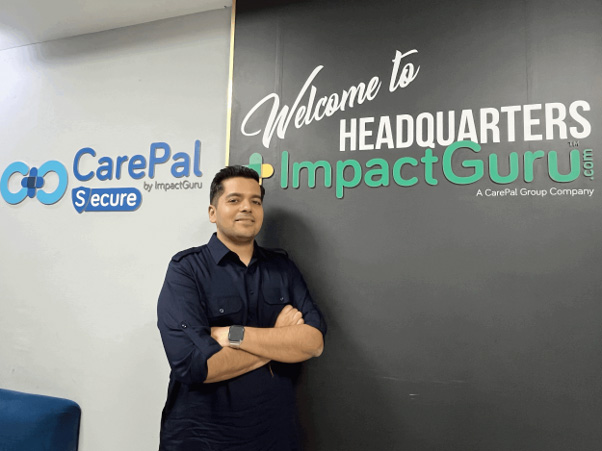
“We have a unique fintech value proposition targeting India’s middle-class customers to enable them to fund their hospital bills.”
Piyush and Khushboo say that no single approach–whether government funding, crowdfunding, insurance, or lending–can adequately finance healthcare costs in India, suggesting it will have to be an integrated approach with all of these four contributing significantly towards the issue.
Learning From Competitors to Lead
Without a hint of hesitation, Piyush acknowledges the valuable lessons drawn from international peers who were paving the way before him. After visiting two healthcare crowdfunding platforms in China, namely Waterdrop Inc. and QingSongChou, he realized that there’s a “unique opportunity” to influence customers about their insurance protection needs once they donate on a crowdfunding platform.
The two companies had built a sizable health insurance broking business by cross-selling insurance products to the donors of the crowdfunding platform.
Regarding lending, Piyush and his team tried to find out how patients were financing their treatment, if not via crowdfunding. After a survey by a leading lending company in India showed 28% of all unsecured loans taken in India are taken for healthcare purposes, the team discovered that the vast majority of those customers were taking loans, either unsecured or secured by mortgaging, gold or property.
After validating the same with their hospital partners, Piyush ventured into lending. “I’m very pleased to share that we crossed a 100 crore (¥1.74 billion) annualized disbursement run just in the last week, which is a great milestone for us just 24 months into the business on the lending side,” he adds.
“We are still at a very very early stage,” says Piyush. Giving the examples of platforms like GoFundMe – which is raising about $4 billion of donations per year in the US and in all the global countries in which they operate –, he said “the potential of humans to give and help each other is really tremendous. We are just barely scratching the surface.”
Piyush’s Wisdom Guide
Piyush says building a profitable venture has come up with a handful of powerful lessons. The first is becoming a resource maximizer—the kind of leader who can deliver exceptional outcomes despite constant resource constraints.
The second is learning to be a realistic optimist. As he puts it, a founder must stay confident about the future, yet disciplined enough to treat every penny with intention, knowing that frugality fuels longevity.
The third lesson is the need for an unfair advantage. “If you don’t have an unfair advantage–whether in your strategy, your technology, or your execution playbook–you risk being disrupted by someone with a much bigger balance sheet,” he cautions.
Fourth, he emphasizes the irreplaceable value of a world-class team. Entrepreneurship, he believes, is a team sport that demands exceptional co-founders, leaders, managers, and employees. Without them, nothing truly meaningful can be achieved.
And finally, Piyush highlights the importance of finding the right investors–partners who understand a founder’s long-term vision, want growth and returns, but also have the patience to stand firm in difficult moments. “We’re fortunate to have investors who know entrepreneurship isn’t a straight line. They’ve stood by us through the lows so that when the right opportunities come, we can seize them together.”
Life Partner as Co-Founder & COO
Describing running a company with his spouse Khushboo as a “unique experience,” Piyush says their “work related conversations continue over dinner, on holidays, and on weekends, given how passionate we are. It’s been a great experience because we have complementary skill sets.”
Piyush is all about finance, strategy, and functional leadership, whereas Khushboo has a strong marketing, communications and design background. “Therefore it’s been a great partnership, which requires a lot of understanding and alignment on mission, as well as sacrifice,” he said.
Going forward, the group’s strategy will be to stay lean and adopt AI to be able to deliver more value at a lower operating cost, and have sustainability. “Now that we have passed the 10-year threshold, the key will be to set the foundation for this company to exist for the long term,” he asserts.
Moving Ahead
Piyush and Khushboo are both quite satisfied with their journey so far. “I take great pride in the fact that I know firsthand the names of people who are alive today because of what this platform did, where I played a small role as a co-founder of the company.”
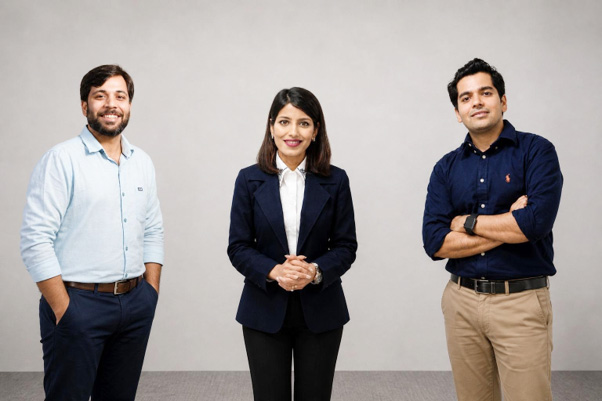
Yet, they remain hungry quite like founders who just started their venture with their vision and short-term goals very clear. Vikas Kaul, has also joined them as Co-founder in this journey who leads all things product, technology, and AI.
“I would assess that if we can continue this journey, then at least by 2030, (we) can help 1 million patients through our platforms. So far we have achieved about 25% of that target. In the next 5 years we have our work cut out.”
When asked about his legacy after 20 years, he said;
“Today nobody questions whether Google or Meta or Reliance will exist in the future or not. They are going to become an institution and we want to get there too. For us, it’s about continuing on this path, creating a truly differentiated, highly scalable, profitable business which also impacts lives.” “Thanks to Beyond Next Ventures for supporting us in this journey.”