

The Future of Japan Woven by Atoms — Why We Invested in Yaqumo
From our currently active third deep-tech focused fund, we invested in the quantum computing startup Yaqumo Inc. which is developing a quantum computer based on the neutral atom platform. The company’s mission is to “continuously expand humanity’s computational capabilities”.
Once dismissed as a physicist’s toy, quantum computers have now become a critical technology that can influence national powers, with competition in their development intensifying worldwide. The neutral atom quantum computer being developed by Yaqumo is a promising approach that has rapidly gained attention in recent years and holds the potential to drive the future of quantum computing development.
In this article, we will provide background information on quantum computers and explain the reasons why us at Beyond Next Ventures decided to invest in Yaqumo.
Contents
- The Future of Japan Woven by Atoms — Why We Invested in Yaqumo
- A Dream Machine? The Potential of Quantum Computers
- Severe Limitations of Current Quantum Computers
- Quantum Computing’s Greatest Challenge: Quantum Error Correction
- The Rise of Neutral Atom Approach That Transformed the Industry
- Yaqumo’s Strengths, Backed by Japan’s Collective Effort
- The Birth of Yaqumo’s Dream Team
- Toward the Development of Japan’s Quantum Industry
A Dream Machine? The Potential of Quantum Computers
Why is it that quantum computers are attracting so much attention today?
In reality, quantum mechanics has already once brought about a revolution in computation, which was the invention of the semiconductor device. The computers that support our modern digital society perform calculations using an enormous number of transistors. The development of transistors was only possible through an understanding of electron behavior provided by quantum mechanics. Today, the semiconductor industry has grown into a massive global market worth 94 trillion yen ($637.9 billion).
However, quantum mechanics does not appear at all in the calculations performed by conventional computers. Moreover, the very fundamental model of computation itself has not changed since the Turing machine was introduced in 1936, in the early days of computing, and there is no trace of quantum mechanics in it. Even today, when humanity’s updated understanding of nature has triggered a major transformation in the form of the digital society, the theory of computation has still incorporated very little of that change.
With recent technological advancements, it has become possible to prepare, manipulate, and observe extremely microscopic objects that exhibit quantum properties such as superposition and entanglement. This has laid the foundation for fully harnessing quantum phenomena as a tool for computation.
As the renowned physicist Richard Feynman said, “if you want to make a simulation of nature, you’d better make it quantum mechanical.” If we can use quantum mechanics—the very fundamental principle of nature—for computation, then the possibilities of computation should be fundamentally expanded.
If the computational technologies that underpin today’s digital society were to evolve at the level of fundamental principles, the social impact would be immeasurable. In fact, quantum computers are projected to generate as much as 300 trillion yen in economic value by 2035. This is the backdrop to the growing attention surrounding quantum computing in recent years.
Severe Limitations of Current Quantum Computers
Quantum computers use qubits (quantum bits) as their basic unit of computation. Any physical system with which we can observe, control, and measure quantum phenomena can serve as a candidate for qubits. As a result, various types of quantum computers are under development.
Among the more established approaches are the superconducting quantum computers, which use superconducting circuits as qubits, and the ion trap quantum computers, which use ions as qubits. The former offers high-speed computation, while the latter is characterized by low error rates.
However, when it comes to performing computations that are truly useful in real-world applications, existing quantum computers fall dramatically short in terms of specifications. As a rough benchmark, it is estimated that at least around 100,000 to 1 million qubits are required for practical, valuable computations. In contrast, the most advanced quantum computers today have at most about a thousand qubits (for example, IBM’s Condor).
Both the superconducting and ion trap approaches face extreme difficulty in scaling to the required level with their current architectures. One of the biggest challenges for quantum computers is figuring out how to scale the number of qubits by orders of magnitude—thousands of times—while maintaining their quality.
On top of that, there is an issue of quantum error correction, a problem unique to quantum computers.
Quantum Computing’s Greatest Challenge: Quantum Error Correction
Every computational element inevitably makes errors during calculations (i.e., unintended flips between 0 and 1). This occurs in both classical and quantum computers. The critical difference lies in how these errors are corrected.
In classical computers, the solution is straightforward: simply duplicate the information to create redundancy. For example, the value “0” can be represented as “000” across three bits. If one bit flips due to an error, the system can infer and correct the error by relying on the remaining bits (for instance, “010” can be recognized as originally “000”).
On the other hand, in the case of quantum computers, it is fundamentally impossible to duplicate information—a principle known as the no-cloning theorem. As a result, in the early days, it was even thought that research on quantum computers was essentially meaningless, since error correction seemed impossible.However, in 1995, Peter Shor and Andrew Steane independently discovered practical quantum error correction protocols, opening the path forward for quantum computing.
Unfortunately, quantum error correction is extremely complex and inefficient compared to classical methods. As a result, protecting even a single bit of information from errors can require thousands of physical qubits, which is the main reason why the required number of qubits becomes so large. (The qubits protected from errors are referred to as logical qubits, while the physical qubits required to implement them are called physical qubits.) Moreover, quantum bits are inherently sensitive to noise, and continuously performing error correction during computation to preserve data is an unprecedented technical challenge.
Because error correction is so difficult, efforts aimed at implementing practical quantum error correction seemed a long-term endeavor.Therefore, researchers also explored whether medium-scale quantum computers without error correction, known as NISQ (Noisy Intermediate-Scale Quantum devices), could still be useful for certain tasks. However, to date, no clear killer application has emerged to drive widespread adoption.
With error correction seeming like a far-off technology and no immediate killer applications in sight, it appeared the industry might face a period of stagnation. It was at that moment that a single paper captured widespread attention.
The Rise of Neutral Atom Approach That Transformed the Industry
In December 2023, a group from Harvard, MIT, and QuEra Computing reported successfully realizing up to 48 logical qubits using 280 physical qubits with the neutral atom approach. Achieving this scale of logical qubits was unprecedented, and the neutral atom method quickly began attracting attention as the third promising approach to quantum computing. It marked the dawn of a new era for quantum computers.
One of the major strengths of the neutral atom approach lies in its scalability. By using lasers to suspend atoms in a vacuum, simply increasing the laser intensity naturally allows the system to scale. Unlike artificial qubits such as superconducting circuits, there is no need to worry about manufacturing errors during scaling. This method is expected to overcome, at least to a certain extent, the scaling challenges that have long been major obstacles for superconducting and ion-trap approaches.
Moreover, because atoms can be freely rearranged using optical tweezers, there is potential to apply highly efficient methods for quantum error correction, such as q-LDPC codes, which were previously considered difficult to implement.
In fact, the neutral atom approach had not previously attracted significant attention as a viable method for quantum computing, largely because precisely controlling each individual atom was thought to be extremely difficult. The recent sudden progress in the neutral atom approach has been driven by a variety of technological advances, including dynamic optical tweezer technology and improvements in computational error rates realized by optimizing control protocols and operational stability—each playing a crucial role in enabling this leap forward.
As a result of these combined advances, the neutral atom approach has transformed into a method with ideal properties for realizing quantum computers, and it has the potential to lead the future of quantum computing development. Globally, the development race is already accelerating rapidly, led by companies such as QuEra Computing and Atom Computing.
Does this mean the race is already decided? Not at all—that is our hypothesis. In fact, because the neutral atom approach has only rapidly advanced in recent years, the history of this method as a quantum computing platform is still very short, and the competition has only just begun.
Yaqumo is the company that will take on this development race with the full strength of Japan behind it.
Yaqumo’s Strengths, Backed by Japan’s Collective Effort
Yaqumo’s core strengths lie in the expertise on ytterbium (Yb) atoms cultivated over many years by members of Kyoto University’s Takahashi Laboratory, and the knowledge of neutral atom quantum computer systems held by the Institute for Molecular Science’s Ohmori Laboratory.
In the neutral atom approach, performance is greatly influenced by the choice of element. The most widely used today is the element rubidium (Rb). Because it has only one electron in its outermost shell, it is relatively simple to handle experimentally and is thus widely adopted; however, it comes with limitations in terms of operational degree of freedom.
On the other hand, Yb atoms, which have two electrons in their outermost shell, are characterized by qubits that are far more stable compared to Rb atoms and by a higher degree of operational flexibility due to the availability of diverse quantum states. However, this also makes their control more complex, and only a limited number of research organizations are capable of handling them.
In this context, Takahashi laboratory possesses years of pioneering expertise in working with Yb atoms, ahead of the rest of the world. By combining this with the Ohmori Laboratory’s knowledge in building and operating complete systems, it becomes possible to develop a truly groundbreaking quantum computer on a global scale.
By leveraging Japan’s world-leading atom control technologies, Yaqumo has the potential to deliver a unique, globally unmatched solution to the remaining challenges facing the practical application of neutral atom quantum computers. This is truly the ultimate frontier where Japan can compete on the strength of its science.
The Birth of Yaqumo’s Dream Team
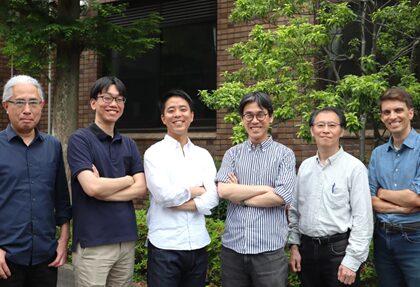
Yaqumo was founded as a dream team, bringing together Japan’s two leading groups in neutral atom quantum computing research: the Takahashi Laboratory, and the Institute for Molecular Science’s Ohmori Laboratory.
The alliance was not initially planned, and the company’s formation in its current structure involved many twists and turns. However, in discussions with Yaqumo’s CEO Kazuhiro Nakashoji since around 2024 — even before the company was officially founded—there has always been one guiding principle. It was to build a quantum computing industry in Japan, and to establish the company in a way that’s capable of competing with global rivals.
Quantum computers using neutral atoms is an increasingly competitive and challenging field. At the same time, we believe that this moment is probably Japan’s last chance to become a leader in the quantum computing industry. With powerful overseas competitors like QuEra Computing and Atom Computing crowding the field, Japan must unite as one if it is even slightly serious about aiming for success.
Relying on that conviction, as we rushed around with CEO Nakashoji, the dream we envisioned gradually began to take shape in reality.
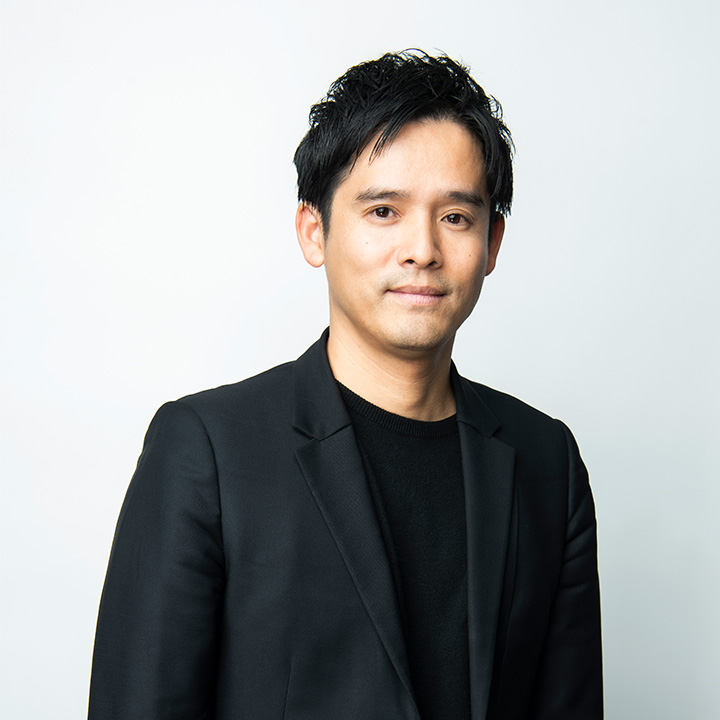
Today, Yaqumo is led by CEO Nakashoji, with top domestic researchers joining as CTO Yuma Nakamura from the Takahashi Group and CSO Takafumi Tomita from the Ohmori Group. In addition, the professors from both groups provide strong support as executive advisors, forming a structure that truly harnesses the full strength of Japan.
In late July 2025, Yaqumo also secured a large-scale grant from NEDO, becoming a startup backed by the full support of the nation.
Before the company was founded, I clearly remember saying at a certain event that “I believe Kazuhiro will unite Japan’s quantum industry,” and that feeling has not changed at all even now.
Toward the Development of Japan’s Quantum Industry
As mentioned at the beginning, we are confident that quantum computers will grow into an industry as significant as today’s semiconductor sector. Leading in this field will directly impact Japan’s future economic growth.
What does it mean for a country to lead the world in a particular industry? We believe that without producing products or services that are the direct source of added value, the development of a prosperous domestic industry cannot be realized. Would Japan’s automotive industry have reached its current scale without the success of domestic OEMs like Toyota? Could Japan’s world-renowned semiconductor materials industry have flourished without the success of DRAM businesses at companies like Toshiba and NEC?
In the quantum computing industry, this simply means building actual quantum computers. Only by doing so can a robust domestic supply chain be cultivated and thriving user industries be developed.
Quantum computing is not just a money game; it is one of the rare fields where scientific accumulation can be fully leveraged. Japan has an abundance of exceptional researchers and by pooling their talents, success is achievable. Yaqumo is poised to become the central hub for this effort. This is precisely why Beyond Next Ventures decided to invest in Yaqumo.
Until the day comes when Japan becomes a leading force in the quantum industry, attracting talent from around the world, and people can look back fondly saying, “We started from such a small place,” Beyond Next Ventures will wholeheartedly accompany Yaqumo on its great journey that is just about to begin.







.jpg)